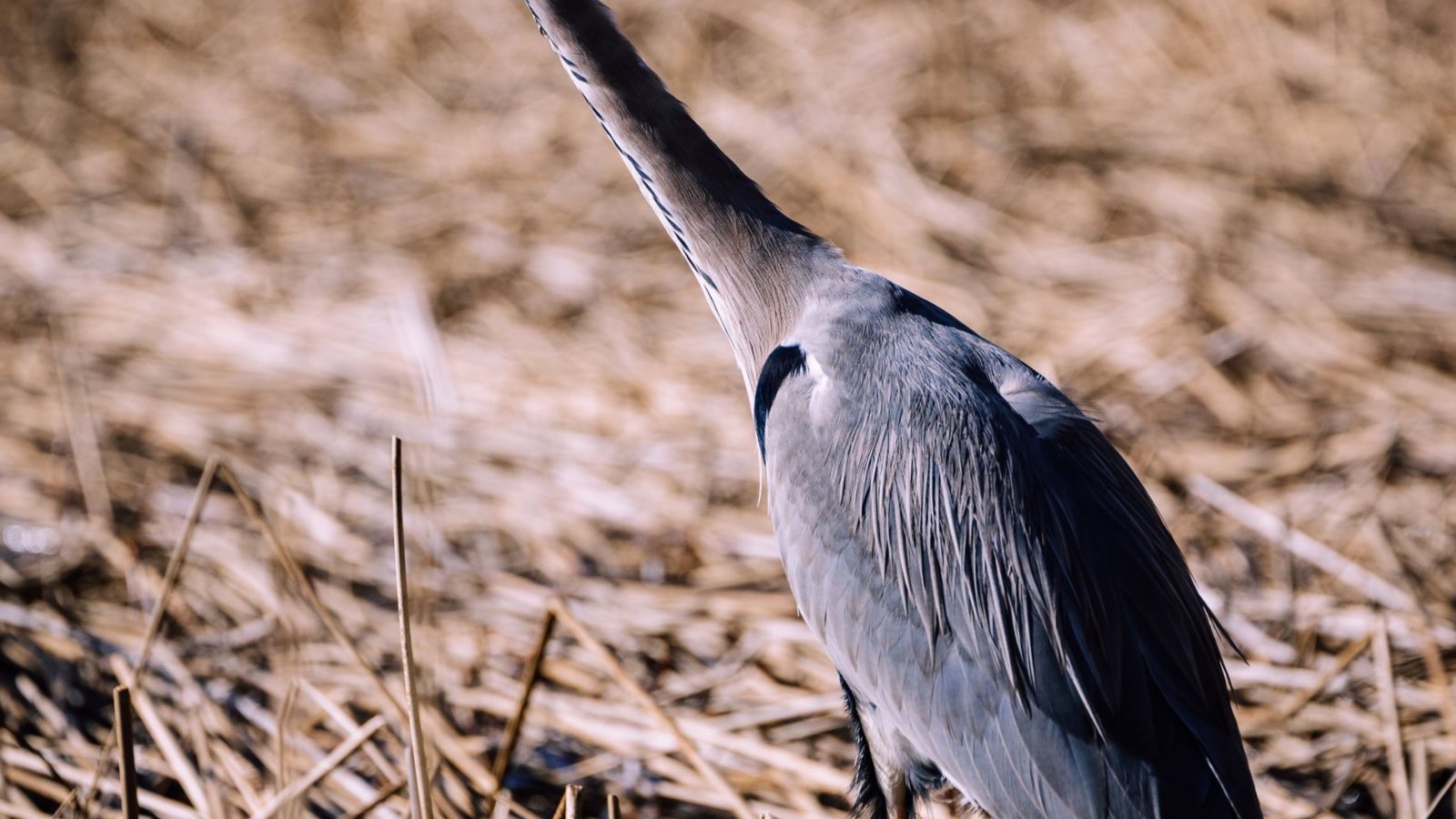
What does a wildlife biologist do when a park wants to build a trail near a wetland? Spotting birds is only one part of the job. The biologist has to decide where and when to look, record what the team finds, and explain what those observations can tell the park manager. A wetland bird survey shows how a field notebook can inform a decision about where people walk.
Imagine that a park manager is choosing between two trail routes. One follows the marsh edge, while the other crosses drier ground. The team needs a narrower question than “Which route is better?” It might ask which parts of the wetland birds use during the breeding season and where that activity overlaps with the proposed routes. That question helps the team decide what to record. A bird flying overhead, for example, provides different evidence from one repeatedly carrying food into the same patch of reeds.
Before heading out, the team maps observation points near both routes. The points need to cover relevant habitat, not just places that are easy to reach. At each point, observers can use a fixed listening period and return on multiple days. They agree on what to record and when to postpone a visit, such as when strong wind makes calls hard to hear. The team also checks access permissions and plans where to stand so observers can work safely without trampling vegetation or approaching nests.
At a survey point, an observer might spend a set amount of time looking and listening, then record each species detected by sight or sound. The field sheet also includes the site, date, start time, and weather. If two calls seem to come from the same bird, the observer should not automatically count them as two individuals. If a call is unfamiliar, it is better to mark it as uncertain than to turn a guess into a species record.
Good notes distinguish an observation from an interpretation. “Adult carrying food into reeds” describes what the observer saw. “Nest in reeds” is a stronger claim and should not go in the record as a confirmed observation unless a nest was actually seen. Likewise, a completed visit with no detections is different from a visit canceled because of weather. Mixing those up could make a site look less used simply because nobody surveyed it that morning.
The biologist checks the field sheets against the digital records before comparing sites. A mistyped point label can put a bird on the wrong side of the marsh in a map. A visit cut short by rain is not directly comparable to a full count. Keeping the original notes makes it easier to find and correct those problems.
Suppose the team detects a marsh bird on four of five visits near the first route and one of five visits near the second. Those figures describe how often the team detected the species, not how many birds live at each site. One individual could account for detections on several mornings. Sound might also carry better at one site, or a bird might stay quiet while an observer is present. Repeated visits help biologists account for missed detections, although a small survey may not provide enough information to estimate how often observers miss the species.
A map can show where detections cluster relative to each route. The biologist may also compare visits made under similar conditions to check whether the apparent pattern depends on an unusually noisy or windy morning. The reasoning is similar to the work in our guide to interpreting biology graphs: check what was measured before deciding what the pattern means.
If repeated observations show breeding activity close to the marsh route, the biologist might recommend shifting that part of the trail away from the reeds. If the evidence is limited to a few observations, the recommendation might instead be to survey again before choosing a route. No detections along the drier route would not, on its own, establish that building there would have no effect on wildlife.
A useful report names the stretch of trail at issue, gives the evidence behind the recommendation, and says what remains uncertain. It also separates what the survey measured from what the team predicts. The survey can show where birds were detected before construction, but it cannot directly show how they will respond once people start using the trail. If the route goes ahead, repeating the survey can help the park assess whether patterns of bird use change.
Look at majors such as wildlife biology, wildlife ecology, zoology, biology, or ecology. The U.S. Bureau of Labor Statistics profile for zoologists and wildlife biologists describes a bachelor's degree as the typical entry requirement and notes that some positions require graduate study. Compare course lists rather than relying on degree names. Look for animal ecology, field methods, statistics, and geographic information systems, often called GIS. Statistics helps you judge how much confidence to place in a pattern, while GIS lets you compare observation locations with features such as habitat boundaries or proposed trails.
You can practice with a notebook and a spreadsheet. Pick two safe, permitted observation spots on school grounds or in a public park. Watch for birds for the same length of time at each spot on several days, keeping the time of day similar when you can. Record the date, weather, and what you actually saw or heard. Stay on permitted paths and leave nests alone. If you cannot identify a bird, write down its features rather than forcing a match.
For more ways to connect field observations with the biology you study in class, see the IBioC learning resources. When you finish your survey, give a classmate your field instructions and ask them to try a count. If they cannot tell when to start timing or how to record an unidentified call, revise the instructions before the next visit.
Do wildlife biologists spend every day outside?
No. Fieldwork is only part of the job. Wildlife biologists also check data, make maps, analyze results, and write reports.
Can I study wildlife if my college has no wildlife biology major?
Yes. A major such as biology, ecology, or zoology can provide relevant training. Check whether you can take courses in field methods, animal ecology, and statistics.
Does hearing no birds mean there are none at a site?
No. A bird may be present but quiet, or wind and other noise may make its calls hard to hear. Record that none were detected during that visit, not that none were present.
About the International Biology Competition: an online biology competition for high school students from around the world. How the rounds work